
Folic acid and pregnancy
An insufficient intake of folic acid during pregnancy can increase the risk of neural tube defects in babies. For this reason, women trying to conceive are advised to take a folic acid supplement before conception.

Folic acid in pregnancy at a glance
- Pregnant and breastfeeding women have a significantly higher requirement for folic acid, needing 550 and 450 micrograms of folate equivalents per day, respectively, compared to the 300 micrograms recommended for non-pregnant adults.
- A folic acid deficiency during pregnancy significantly increases the risk of neural tube defects in the developing baby.
- A folate-rich diet alone is often not enough to ensure an adequate intake during pregnancy.
- Expectant mothers should take an additional 400 micrograms of folic acid daily until the end of the first trimester.
- If there has been a previous case of a neural tube defect, taking up to four milligrams of folic acid per day in a subsequent pregnancy may be beneficial.
What is folic acid and why is it important?
Folic acid is the synthetic form of vitamin B9, whereas folate is its naturally occurring counterpart. Although these terms are often used interchangeably, there are biochemical differences that can be relevant to intake.
This water-soluble vitamin, which belongs to the B-vitamin group, has several functions in the body. It is particularly important for cell division and the normal function of the immune system.
Folic acid also contributes to:
- normal blood formation
- normal amino acid synthesis
- normal psychological function
How much folic acid do pregnant women need?
According to the German Nutrition Society (DGE), pregnant women require 550 micrograms of folate equivalents per day, nearly double the standard recommended intake of 300 micrograms. After giving birth, their requirement decreases but remains elevated at 450 micrograms during breastfeeding.1
What happens if you don’t get enough folic acid during pregnancy?
Folic acid plays a crucial role in blood formation, cell division, and the growth of maternal tissue. A deficiency during pregnancy can lead to anaemia in the mother and increase the risk of neural tube defects in the baby.
The neural tube is the embryonic precursor to the central nervous system, which later develops into the brain and spinal cord. There are different types of neural tube defects, the most common being:
- anencephaly, where parts of the brain and skull are missing
- spina bifida, also known as an open spine
Folate-rich diet for expectant mothers
To meet their increased needs, pregnant women should consume a diet rich in folate. Many foods contain folate, with particularly high levels found in:
- brussels sprouts and other cabbage varieties
- pulses such as lentils and beans
- leafy green vegetables like spinach
- wheat germ and bran
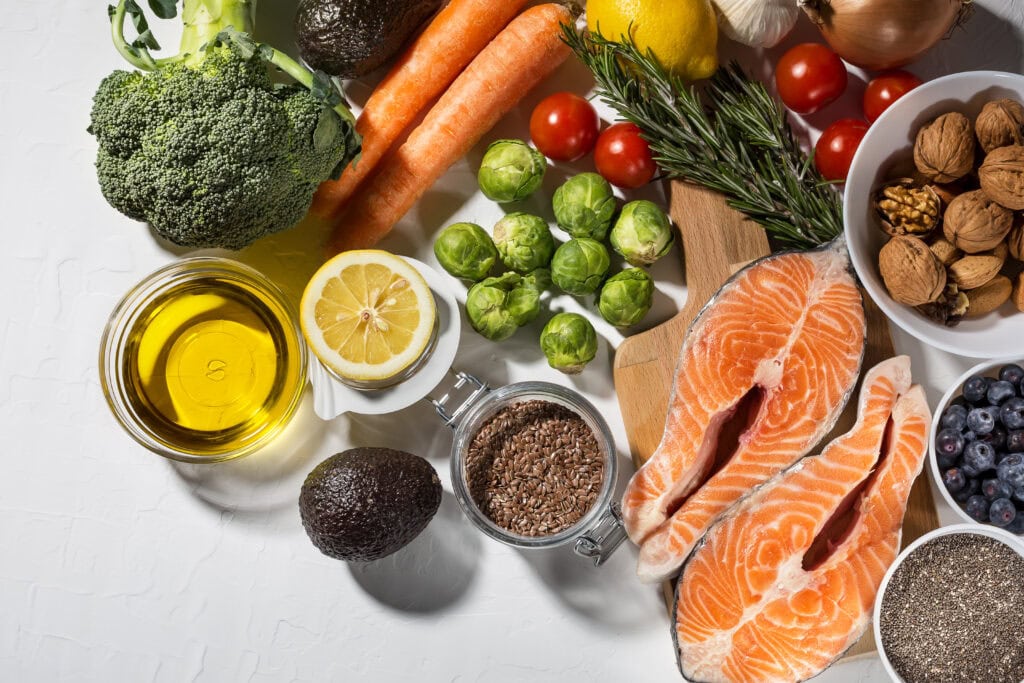
Contrary to popular belief, citrus fruits contain only small amounts of natural folate and should not be relied upon as a primary source. The animal-based food with the highest folate content is liver, but it is also high in vitamin A. Excessive vitamin A intake between weeks three and nine of pregnancy may harm the developing baby. For this reason, pregnant women are advised to avoid liver.2
Folic acid supplements for women trying to conceive
Although eating folate-rich foods is essential, diet alone is often not enough to meet the increased folic acid requirements during pregnancy. To support the healthy development of the unborn baby, women should take a daily supplement of 400 micrograms of folic acid for at least four weeks before conception and throughout the first trimester.
Since conception is often unplanned or goes unnoticed in the early stages, it is recommended that all women trying to conceive start taking folic acid supplements in advance.34 This helps ensure the baby receives sufficient folic acid in the crucial first weeks of development.
Advanced individual fertility insights through next-generation genetic analysis.
When is the right time
to start a family? For many women, this crucial decision is often based on hope rather than knowledge of their fertility. With more women choosing to start families after 30, hope isn’t enough—they need concrete answers.
Find out more about Fertility Sensor >
Is too much folic acid during pregnancy dangerous?
While folic acid is vital for both mother and baby, excessive intake can pose potential health risks. Some research suggests that an overdose may increase the risk of autism, especially when combined with excessive vitamin B12 intake.5
To avoid side effects and health risks, most pregnant women should not exceed the maximum recommended daily intake of 1,000 micrograms, which includes supplements and fortified foods in addition to dietary intake.6
When high-dose folic acid supplements may be needed
If a woman has previously had a baby with a neural tube defect, the risk of recurrence is significantly higher. In such cases, taking four milligrams of folic acid per day may reduce the likelihood of another occurrence. Ideally, supplementation should begin three months before conception and continue until the end of the first trimester.
Which stage of pregnancy is folic acid most important?
The neural tube develops between weeks 19 and 28 after fertilisation and forms the basis of the central nervous system. To ensure adequate folic acid levels in the body for brain and spinal cord development, supplementation should ideally begin before conception.
What happens if you don’t take folic acid during pregnancy?
A folic acid deficiency can have severe consequences for the unborn baby. Since it can be challenging for pregnant women to meet their increased needs through diet alone, following folic acid intake recommendations is strongly advised to minimise developmental risks.
This also applies to iodine. Alongside folic acid, iodine is another essential nutrient that pregnant women typically require in supplement form.
- 1 Deutsche Gesellschaft für Ernährung e.V.: Empfohlene Folatzufuhr (Stand: 2015). URL: https://www.dge.de/wissenschaft/referenzwerte/folat/ (zuletzt aufgerufen am: 25.10.2024).
- 2 Bundesinstitut für Risikobewertung: Schwangere sollten weiterhin auf den Verzehr von Leber verzichten (Veröffentlichung: 23.10.1995). URL: https://www.bfr.bund.de/de/presseinformation/1995/20/schwangere_sollten_weiterhin_auf_den_verzehr_von_leber_verzichten-775.html (zuletzt aufgerufen am: 28.10.2024). URL: https://www.mri.bund.de/fileadmin/MRI/Institute/EV/NVSII_Abschlussbericht_Teil_2.pdf (zuletzt aufgerufen am: 25.10.2024).
- 3 Bundesinstitut für Risikobewertung: Schwanger werden? – Aber nicht ohne Folsäure! (Stand: 2022). URL: https://www.bfr.bund.de/cm/350/schwanger-werden-aber-nicht-ohne-folsaeure.pdf (zuletzt aufgerufen am: 25.10.2024).
- 4 Deutsche Gesellschaft für Ernährung e.V.: Ausgewählte Fragen und Antworten zu Folat (Stand: Dezember 2018). URL: https://www.dge.de/gesunde-ernaehrung/faq/folat/ (zuletzt aufgerufen: 25.10.2024).
- 5 Johns Hopkins School of Public Health: Too Much Folate in Pregnant Women Increases Risk for Autism, Study Suggests (Veröffentlichung: 11.05.2016). URL: https://publichealth.jhu.edu/2016/too-much-folate-in-pregnant-women-increases-risk-for-autism-study-suggests (zuletzt aufgerufen am: 28.10.2024).
- 6 European Food Safety Authority: Overview on Tolerable Upper Intake Levels as derived by the Scientific Committee on Food (SCF) and the EFSA Panel on Dietetic Products, Nutrition and Allergies (NDA) (Veröffentlichung: Juni 2024). URL: https://www.efsa.europa.eu/sites/default/files/2024-05/ul-summary-report.pdf (zuletzt aufgerufen am: 25.10.2024).
Important to know
Are you not a specialist and have complaints, certain diseases or suspect deficiency symptoms? Then please be sure to consult a doctor to discuss this.
Curious how your genetics shape your personal vitamin and mineral needs? A DNA analysis turns general guidelines into numbers made for you.
»Discover NovoDaily Lifestyle« →